
How to Start a Manufacturing Business in 2026 | Complete Guide for Beginners
Learn how to start a profitable manufacturing business in 2026 with step-by-step process, investment guide, machinery details, government schemes, marketing, legal requirements & FAQs.
How to Start a Manufacturing Business in 2026 – Complete Guide (Step-by-Step for Beginners)
Everything you need to know — What, Why, How, Where & Future Scope
Introduction
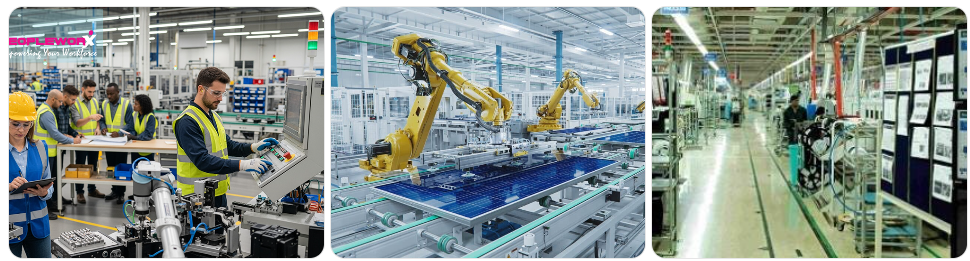
The manufacturing sector is one of the strongest pillars of global economic growth. With the rise of Industry 4.0, automation, robotics, AI-driven production, and global export demand, 2026 is going to be one of the best years for starting a manufacturing business.
India, Europe, USA, UAE, and Southeast Asia are promoting manufacturing through:
- Government incentives
- Subsidies & grants
- Cheaper digital tools
- Stronger export support
- Rise in demand for Indian-made affordable products
Whether you want to build a small-scale factory or a large-scale production unit, this guide covers everything:
- What is manufacturing?
- Why start a manufacturing business in 2026?
- Most profitable manufacturing ideas
- Step-by-step setup process
- Licenses & legal requirements
- Machinery & investment
- Marketing & distribution
- ROI & profit calculation
- Challenges & future trends
- 20+ FAQs
Let’s begin.
What Is a Manufacturing Business?
A manufacturing business involves converting raw materials into finished products using machines, labor, and technology.
Manufactured goods can be sold to:
- Wholesalers
- Retailers
- Exporters
- Online customers
- Government departments
- Companies directly (B2B)
Example
- Raw material: Plastic granules
- Process: Injection moulding
- Product: Buckets, mugs, containers
- Selling to: Wholesalers & retailers
- Margin: 25–50%
Why Start a Manufacturing Business in 2026?
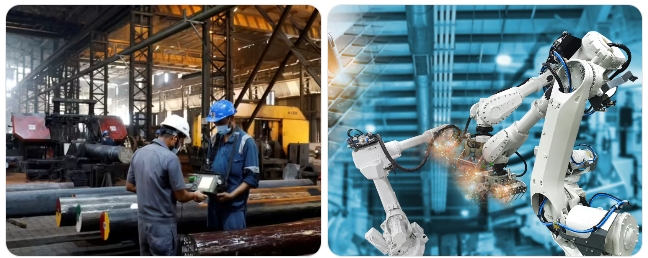
There are 7 powerful reasons why 2026 is the right time:
1. High Demand for Made-in-India Products
Domestic consumption + export demand is booming.
2. Government Support
- PMEGP Loans
- Mudra Loans
- MSME Subsidies
- “Make In India” incentives
3. Low Competition in Many Niches
Thousands of local & global niches still have high demand but low supply.
4. High Profit Margins
Manufacturing margins: 30%–200%
5. Control Over Quality
Unlike trading, you can create your own brand with better durability.
6. Long-term Stability
Manufacturing gives a repeat-customer business model.
7. Technology Makes It Easier
Modern machines require less space, less labor, and produce more.
Best Manufacturing Business Ideas for 2026
Top 20 High-Profit Ideas
| Category | Examples |
|---|---|
| Plastic Products | Containers, hangers, household items |
| Food Processing | Spices, snacks, packaged foods |
| Garments & Textile | T-shirts, leggings, undergarments |
| Beauty & Personal Care | Soaps, shampoo, creams |
| Metal Fabrication | Doors, windows, grills |
| Paper Products | Paper bags, tissue paper |
| Electronics | LED bulbs, chargers, power banks |
| Eco-friendly Products | Bamboo items, jute bags |
| Automobile Accessories | Seat covers, mats |
| Furniture | Plastic chairs, steel furniture |
If you want, I can send 50+ profitable manufacturing ideas separately.
Step-by-Step Guide – How to Start a Manufacturing Business in 2026
Step 1: Choose the Right Product
Select a product based on:
- Market demand
- Profit margin
- Raw material availability
- Machine investment
- Competition
- Ease of production
Tools for Market Research
- Google Trends
- Amazon & Flipkart market demand
- IndiaMART wholesale rates
- YouTube industry analysis
- Local market surveys
2: Prepare a Business Plan
Your manufacturing business plan should include:
✔ Product selection
✔ Target customers
✔ Raw materials needed
✔ Total investment required
✔ Machinery list
✔ Required manpower
✔ Marketing strategy
✔ Projected profit
Step 3: Register Your Manufacturing Business (Legal Setup)
Required Registrations
| Registration | Purpose |
|---|---|
| Udyam MSME | Government benefits |
| GST Registration | Tax compliance |
| Factory License | Mandatory for production units |
| Trade License | Local permission |
| Pollution Certificate | Depends on product category |
| FSSAI | For food manufacturing |
| Trademark | Brand protection |
Step 4: Choose the Location
Factory Requirements
- 300 to 2000 sq ft (varies by product)
- Power supply (3-phase required for machines)
- Good ventilation
- Fire safety equipment
- Storage area
Step 5: Purchase Machinery
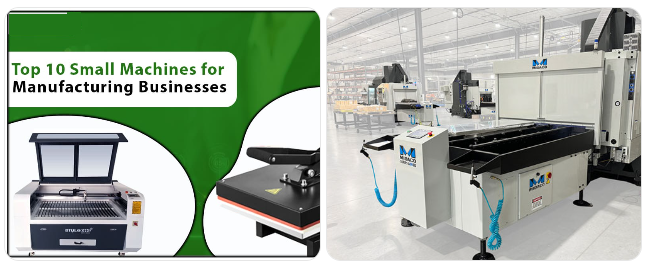
Types of Machines
- Manual
- Semi-automatic
- Fully automatic
Choose based on:
- Budget
- Production capacity
- Skill required
Where to Buy Machines
- IndiaMART
- TradeIndia
- Local machine manufacturers
- International suppliers (China, Vietnam)
Step 6: Hire Skilled Workers
Roles you may need:
- Machine operators
- Helpers
- Packaging staff
- Quality control manager
- Accountant
- Sales/marketing support
Step 7: Raw Material Procurement
Ensure:
- High-quality raw materials
- Stable supply chain
- Price negotiation
- Supplier reliability
Step 8: Begin Production
Steps include:
- Setting up the machine
- Trial production
- Quality testing
- Packaging
- Dispatch
Maintain Standard Operating Procedures (SOPs) for smooth functioning.
Step 9: Packaging & Branding
Good packaging increases:
✔ Customer trust
✔ Product shelf value
✔ Brand recall
Invest in:
- Attractive packaging
- Logo & label
- Barcode
- QR code
Step 10: Sales & Marketing Strategy
Where to Sell
| Platform | Type |
|---|---|
| Amazon, Flipkart, Meesho | Online retail |
| IndiaMART, TradeIndia, VyaparGrow | B2B wholesale |
| Own Website | D2C model |
| Retail shops | Distributors & wholesalers |
| Export market | Via export houses |
Marketing Tools
- Facebook ads
- WhatsApp marketing
- Influencers
- SEO blogs
- Trade exhibitions
Step 11: Calculate Cost, Price & Profit
Example:
Raw material: ₹50
Labor: ₹10
Electricity: ₹5
Packaging: ₹8
Total cost per unit: ₹73
Selling price: ₹110
Profit per unit: ₹37
Margin: 51%
Step 12: Maintain Accounts & Inventory
Use:
- Vyapar App
- Tally
- Zoho
- Busy software
Track:
✔ Daily production
✔ Raw material usage
✔ Sales
✔ Cash flow
Investment Required for Manufacturing Business
Small-Scale Manufacturing
₹1 – ₹10 Lakhs
Medium-Scale
₹10 – ₹50 Lakhs
Large-Scale
₹50 Lakhs – ₹5 Crore
Challenges & Solutions
| Challenge | Solution |
|---|---|
| High competition | Unique product + branding |
| Power supply issues | Install generator |
| Skilled labor shortage | Training programs |
| Raw material fluctuation | Multiple suppliers |
| Poor quality control | Regular inspections |
Future Scope of Manufacturing (2026–2035)
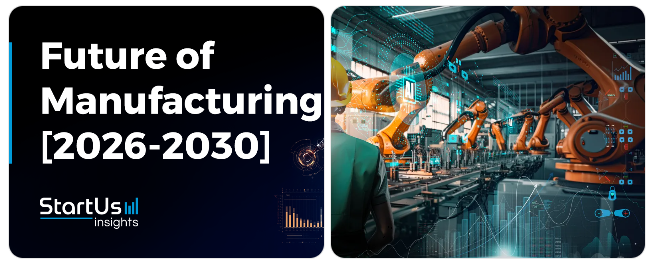
The future of manufacturing lies in:
- Robotics
- AI-driven assembly lines
- 3D printing
- Digital twins
- Renewable energy-based production
- Cross-border exports
- Customizable small-batch manufacturing
Demand for Indian-made goods will rise significantly due to global supply-chain diversification.
Conclusion
Starting a manufacturing business in 2026 is a powerful opportunity for entrepreneurs. With government support, rising local and global demand, and easy access to technology, even beginners can start small and scale fast.
Key factors for success:
- Choose the right product
- Ensure high quality
- Build a strong brand
- Use digital marketing
- Maintain profitability
If executed well, manufacturing can turn into a multi-crore business within 2-4 years.
Frequently Asked Questions (FAQ)
(20 Questions)
1. How much money is needed to start a manufacturing business?
Minimum ₹1 lakh to ₹50 lakhs depending on product category.
2. Do I need a factory license?
Yes, for most manufacturing units.
3. Can I start manufacturing from home?
Yes, for small items like candles, soap, food products.
4. Which manufacturing is most profitable?
Electronics, food, plastic goods, garments, cosmetics.
5. How can I get government subsidy?
Register under MSME → Apply for PMEGP, Mudra, CGTMSE schemes.
6. What skills do I need?
Basic production knowledge, sourcing, and quality control.
7. How long to start earning profits?
1–6 months depending on demand.
8. How to choose the right machine?
Consider capacity, warranty, power usage, and brand reputation.
9. What if I don’t know manufacturing?
Hire skilled workers or take a short technical course.
10. What is the best location for a factory?
Industrial areas, outskirts of cities, or low-rent zones.
11. Can I export manufactured goods?
Yes. Many small manufacturers earn huge profits through exports.
12. How to find customers?
IndiaMART, VyaparGrow, social media, distributors, exhibitions.
13. Which packaging is best?
Depends on product; branded packaging gives higher value.
14. What documents are required?
GST, MSME, Trade License, Factory License, Pollution NOC.
15. Is manufacturing risky?
Every business has risks; proper planning minimizes them.
16. How to maintain quality?
Strict SOPs, inspections, machine maintenance.
17. Do I need workers?
Yes, except for fully automated units.
18. Can I get bank loans?
Yes — PMEGP, Mudra, MSME loans.
19. What is the average profit margin?
30%–120% depending on product.
20. Is manufacturing a good career for beginners?
Yes. With low competition and rising demand, it’s highly profitable.