
How to Protect Your Parents From Scam Calls (2026 Family Safety Guide)
How to Protect Your Parents From Scam Calls (Complete Family Safety Guide)
Every year, millions of parents and grandparents receive scam calls from fraudsters pretending to be:
- Bank officials
- Police officers
- Government employees
- Customer support agents
- Delivery companies
- Family members in distress
Many victims are intelligent, experienced, and cautious people.
The problem is that modern scammers use psychology, urgency, fear, and even artificial intelligence to make their stories sound convincing.
If you’re worried about your parents becoming victims of phone scams, this guide explains practical steps you can take to help protect them.
Why Parents Are Frequently Targeted
Scammers often target older adults because they believe they are more likely to:
- Answer unknown calls
- Trust authority figures
- Have savings or retirement funds
- Respond to family emergencies
- Be less familiar with modern scam techniques
While these assumptions aren’t always true, fraudsters actively design scams around them.
Common Scam Calls Targeting Parents
Fake Bank Calls
“Your account will be blocked.”
“Your KYC has expired.”
“Please share the OTP.”
Grandparent Scams
A caller pretends to be a child or grandchild in trouble.
“Mom, I had an accident.”
“I need money urgently.”
Police or Government Scams
The scammer claims:
- Legal action is pending
- A bank account is under investigation
- Documents are linked to criminal activity
Tech Support Scams
“Your phone has been hacked.”
“Your computer has a virus.”
Victims are often asked to install remote-access software.
AI Voice Cloning Scams
Fraudsters can now imitate the voices of family members using artificial intelligence.
A voice that sounds exactly like a son or daughter may not actually be real.
1. Teach the Golden Rule: Never Share OTPs
This is the most important lesson.
Parents should never share:
- OTPs
- ATM PINs
- UPI PINs
- Banking passwords
- CVV numbers
Not with:
- Banks
- Police
- Customer support
- Government officials
- Anyone else
A simple rule helps:
“If someone asks for an OTP, the answer is always NO.”
2. Create a Family Verification Rule
Make a family agreement:
Before Sending Money
Always verify through:
- A direct phone call
- A video call
- Another family member
No exceptions.
Even if the caller sounds genuine.
3. Establish a Secret Family Code Word
Choose a private phrase known only to close family members.
Example:
“Blue Elephant”
or
“Mango Garden”
If a caller claims to be a family member in trouble, ask for the code word.
Most scammers will fail immediately.
This is especially useful against AI voice-cloning scams.
4. Encourage Parents to Slow Down
Scammers rely on urgency.
Common phrases include:
- “Act immediately.”
- “Do not disconnect.”
- “Only 10 minutes left.”
- “Your account will be blocked.”
Teach parents:
Urgency Is a Warning Sign
Legitimate organizations rarely demand instant action over the phone.
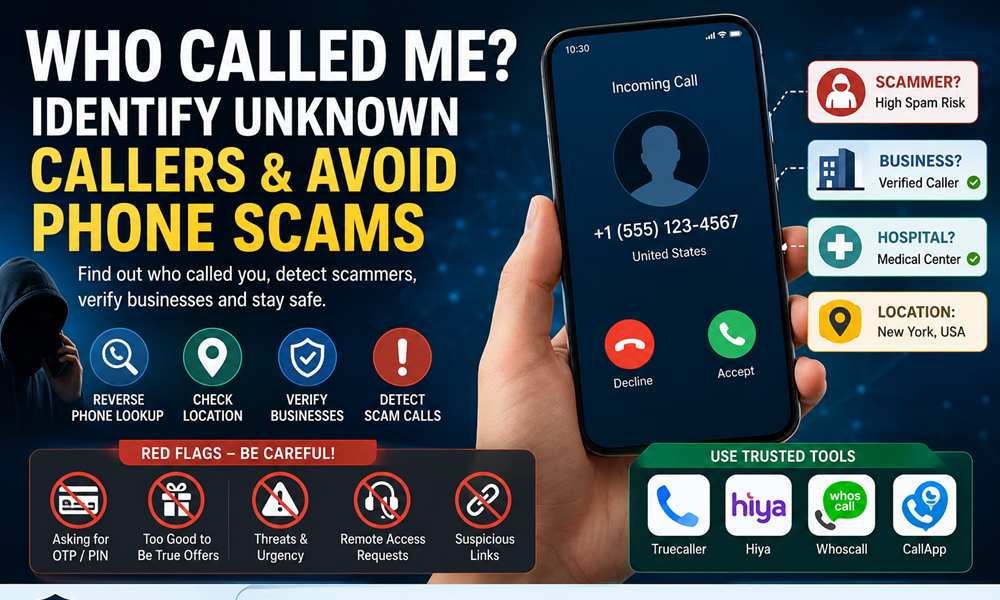
5. Install Caller Identification Apps
Apps such as:
- Truecaller
- Hiya
- Whoscall
can help identify suspicious callers.
However:
Important
Caller ID is not proof.
Scammers can sometimes use misleading names.
Use these apps as a warning system, not a guarantee.
6. Explain Common Scam Scripts
Many parents have never heard the exact phrases scammers use.
Discuss examples like:
- “Your KYC has expired.”
- “Your parcel contains illegal items.”
- “Your account is under investigation.”
- “Share the OTP for verification.”
The more familiar these tactics become, the less effective they are.
7. Set Up Banking Alerts
Enable:
- SMS transaction alerts
- Email notifications
- App notifications
This allows suspicious activity to be detected quickly.
Fast detection can significantly reduce losses.
8. Teach Them to Hang Up
Many victims stay on the call because they don’t want to appear rude.
Remind parents:
It Is Okay to Hang Up
A legitimate organization will still be available through official channels.
Scammers depend on keeping victims engaged.
9. Limit Public Sharing of Personal Information
Many scammers gather information from:
- Public websites
Encourage parents to avoid publicly posting:
- Phone numbers
- Addresses
- Banking information
- Travel plans
Less public information means fewer opportunities for targeted scams.
10. Talk About Scams Regularly
One conversation is not enough.
Scam tactics change constantly.
A simple monthly discussion about:
- New scams
- Suspicious calls
- Online fraud
can dramatically improve awareness.
Real-Life Example
Caller
Hello Madam.
Your son has been involved in an accident.
He needs immediate financial assistance.
Please transfer ₹75,000 now.
Parent
Can I speak with him?
Caller
He is unable to talk.
There is no time.
Please send the money immediately.
Correct Response
✓ Hang up
✓ Call your son directly
✓ Verify through another family member
✓ Never transfer money based on one call
Warning Signs Parents Should Memorize
Be suspicious if a caller:
✗ Requests OTPs
✗ Requests PINs
✗ Demands secrecy
✗ Creates panic
✗ Threatens legal action
✗ Requests immediate payment
✗ Refuses verification
✗ Asks to install apps
Any one of these signs should trigger caution.
Family Scam Safety Checklist
Discuss these rules with your parents:
☐ Never share OTPs
☐ Never share banking passwords
☐ Never send money without verification
☐ Hang up if pressured
☐ Verify through another channel
☐ Ask family members before making large payments
☐ Report suspicious calls
☐ Block scam numbers
What To Do If Your Parent Has Already Shared Information
Act immediately.
If Banking Information Was Shared
- Contact the bank
- Freeze affected services
- Review transactions
If an OTP Was Shared
- Notify the bank immediately
- Monitor account activity
If a Suspicious App Was Installed
- Remove the app
- Change passwords
- Review permissions
Fast action can reduce damage significantly.
Frequently Asked Questions (FAQ)
Why are older adults targeted by scammers?
Scammers believe older adults may be more trusting and more likely to respond to authority-based scams.
What is the best way to protect parents from scam calls?
Education, verification habits, and regular conversations about scams.
Can scammers imitate a family member’s voice?
Yes. AI voice-cloning technology can create convincing fake voices.
Should parents answer unknown numbers?
They can answer cautiously, but should never share sensitive information without verification.
What is the most important rule?
Never share OTPs, PINs, passwords, or banking credentials over the phone.
Final Thoughts
Protecting your parents from scam calls is not about making them fearful—it’s about helping them recognize manipulation before it succeeds.
Simple habits such as verifying emergencies, refusing OTP requests, using a family code word, and hanging up on suspicious callers can prevent most phone scams.
The best defense is awareness, communication, and a family culture of verification.
Help Your Family Stay Safe Online
Scam tactics continue to evolve, from fake bank calls to AI-generated voice scams. Staying informed is one of the most effective ways to reduce risk.
At VyaparGrow.com, we publish guides on scam awareness, business verification, online safety, and fraud prevention to help families and businesses make safer decisions in today’s digital world.