
Reverse Phone Lookup: Complete Beginner’s Guide (2026) | Identify Unknown Callers
Reverse Phone Lookup: Complete Beginner’s Guide (2026)
Have you ever received a call from an unknown number and wondered:
- Who called me?
- Is this number safe?
- Is it a business or a scammer?
- Should I call back?
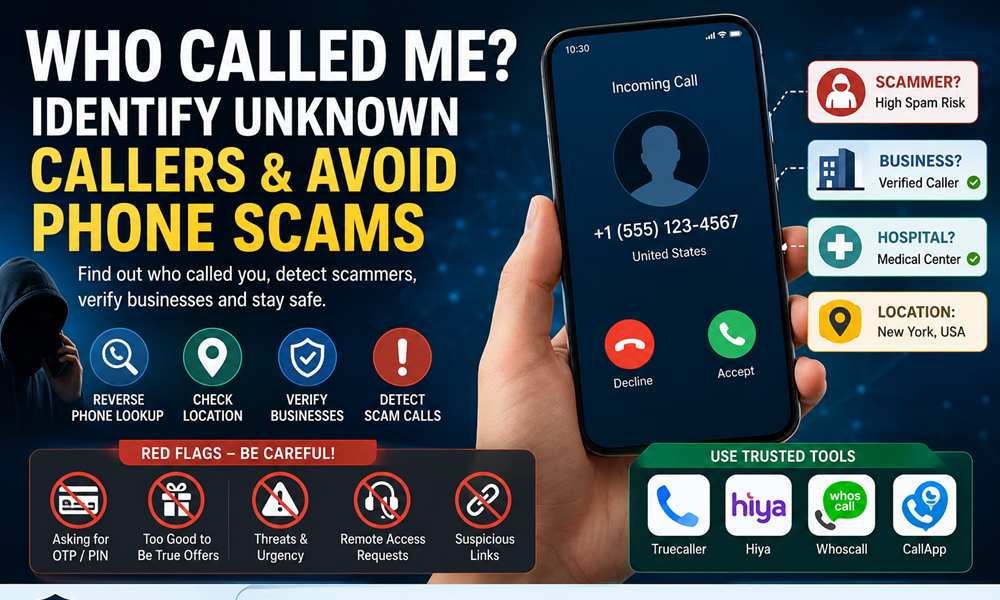
A reverse phone lookup helps you identify information associated with a phone number before responding.
This beginner-friendly guide explains what reverse phone lookup is, how it works, its limitations, and how to use it safely.
What Is Reverse Phone Lookup?
Reverse phone lookup is the process of searching for information about a person, business, or organization using their phone number.
Unlike a normal search where you look up a person’s contact number using their name, reverse lookup starts with the phone number and attempts to identify the owner.
For example:
You receive a call from:
+91 98765 43210
Instead of wondering who called, you search the number to find possible information associated with it.
What Information Can a Reverse Phone Lookup Reveal?
Depending on publicly available information, a reverse lookup may show:
- Business name
- Caller ID name
- Company website
- Business address
- Social media profiles
- Customer reviews
- Spam reports
- Scam complaints
- Location information
- Service category
Results vary depending on the number and available online records.
Why People Use Reverse Phone Lookup
Common reasons include:
Identifying Unknown Callers
Discover whether the caller is a business, individual, telemarketer, or scammer.
Verifying Businesses
Check whether a business actually exists before making payments or sharing information.
Avoiding Scam Calls
Many scam numbers are reported online by previous victims.
Checking Missed Calls
Determine whether a missed call deserves a callback.
Screening Potential Customers
Businesses often verify unknown callers before engaging in discussions.
How Reverse Phone Lookup Works
When you search a phone number, lookup systems may collect publicly available information from:
- Business directories
- Public websites
- Customer reviews
- Social media profiles
- Caller ID databases
- Community spam reports
- Business listings
- Search engine results
The system then organizes available information into a searchable format.
Methods to Perform a Reverse Phone Lookup
1. Google Search
The simplest method is searching the exact number.
Example:
“9876543210”
You may find:
- Business websites
- Complaint reports
- Forum discussions
- Online directories
- Social media mentions
2. Caller Identification Apps
Popular apps include:
- Truecaller
- Hiya
- Whoscall
These apps often show:
- Reported names
- Spam warnings
- Community feedback
Remember that caller ID names are not always verified.
3. Business Directories
Many legitimate businesses publish contact information online.
Look for:
- Business name
- Website
- Address
- Reviews
- Contact details
Consistency across multiple sources is a positive sign.
4. Social Media Search
Search the phone number on:
- X (Twitter)
Some businesses and professionals publicly display contact information.
5. Business Listing Platforms
Many local businesses appear in online business directories and listing platforms.
You may find:
- Business details
- Operating hours
- Services offered
- Customer feedback
Reverse Phone Lookup Example
Imagine you receive a call from:
+91 91234 56789
You search the number and discover:
- Several complaints mentioning fake KYC updates
- Reports requesting OTPs
- Spam warnings from users
This information helps you avoid becoming the next victim.
Warning Signs During Reverse Lookup
Be cautious if you discover reports mentioning:
- OTP requests
- Banking fraud
- KYC scams
- Fake customer support
- Lottery scams
- Investment scams
- Loan scams
- Threatening calls
Multiple reports often indicate a higher risk.
Can Reverse Phone Lookup Identify Every Caller?
No.
There are limitations.
Some numbers may not have publicly available information.
Examples include:
- New mobile numbers
- Private individuals
- Recently activated SIM cards
- Numbers never published online
In such cases, a lookup may return limited or no information.
Common Myths About Reverse Phone Lookup
Myth 1: Every Number Can Be Identified
False.
Many numbers have little or no public information.
Myth 2: Caller ID Apps Are Always Correct
False.
Caller names can sometimes be outdated, user-generated, or manipulated.
Myth 3: A Number With No Results Is Safe
False.
New scam numbers appear regularly.
No results do not guarantee legitimacy.
Myth 4: International Numbers Are Always Scams
False.
Many legitimate businesses and contacts use international numbers.
Verification remains important.
Safety Tips When Investigating Unknown Numbers
Never Share
- OTPs
- ATM PINs
- UPI PINs
- Banking passwords
- CVV numbers
Verify Independently
Contact businesses using official websites and customer support numbers.
Be Skeptical of Urgency
Scammers often create panic by claiming:
- Account suspension
- Legal action
- Package issues
- Bank verification requirements
Trust Multiple Sources
One source may be inaccurate.
Always compare information from several places.
Real-Life Scam Scenario
Caller:
Sir, your bank KYC has expired.
Victim:
How do I update it?
Caller:
Share the OTP sent to your phone.
Victim:
Why do you need my OTP?
Caller:
Your account will be blocked today if you do not act immediately.
Red Flags
✓ Urgency
✓ Threats
✓ OTP request
✓ Pressure tactics
This is a common scam pattern.
What To Do If You Receive Suspicious Calls
- Do not share personal information.
- End the call politely.
- Search the number online.
- Block the number if necessary.
- Report scam activity.
- Contact your bank immediately if sensitive information was shared.
Frequently Asked Questions (FAQ)
Is reverse phone lookup legal?
Yes, when using publicly available information and legitimate services.
Can reverse lookup reveal a person’s full identity?
Not always. Results depend on publicly available data.
Are free reverse phone lookups accurate?
They can provide useful clues, but accuracy varies.
Can scammers fake phone numbers?
Yes. Caller ID spoofing is common.
Should I call back unknown numbers?
Only after verifying the number.
Can a reverse lookup help identify scam calls?
Often yes, especially if other users have already reported the number.
Final Thoughts
Reverse phone lookup is one of the simplest tools for identifying unknown callers, verifying businesses, and avoiding scams.
While no lookup method is perfect, combining search engines, caller ID apps, business directories, and common-sense verification can significantly reduce your risk.
Always verify before trusting an unknown caller, especially when money, personal information, or urgent requests are involved.
Verify Businesses Before You Trust Them
When dealing with unfamiliar businesses, service providers, or sales calls, take time to verify their information before making payments or sharing personal details.
Visit VyaparGrow.com to discover business listings, business resources, and growth opportunities while making more informed decisions about the companies and contacts you interact with online.
Q: How do I find out who owns a phone number?
A: You can use search engines, caller ID apps, business directories, social media searches, and reverse phone lookup services to find publicly available information associated with a phone number.
Q: Is reverse phone lookup free?
A: Many basic lookup methods such as Google searches and caller ID apps are free, although some advanced services may charge a fee.
Q: Can reverse phone lookup identify scammers?
A: It can help identify numbers that have been reported by other users, but it cannot guarantee whether a caller is legitimate or fraudulent.