
How to Check if a Phone Number Is Safe (2026 Guide) | Avoid Scam Calls
How to Check if a Phone Number Is Safe Before Answering or Calling Back
Unknown phone numbers are a part of daily life. Some calls come from genuine businesses, delivery partners, banks, or customers, while others may be spam, telemarketing, phishing attempts, or outright scams.
Before answering or calling back an unknown number, it’s worth taking a few minutes to verify whether the number is safe.
This guide explains practical ways to check a phone number and avoid becoming a victim of fraud.
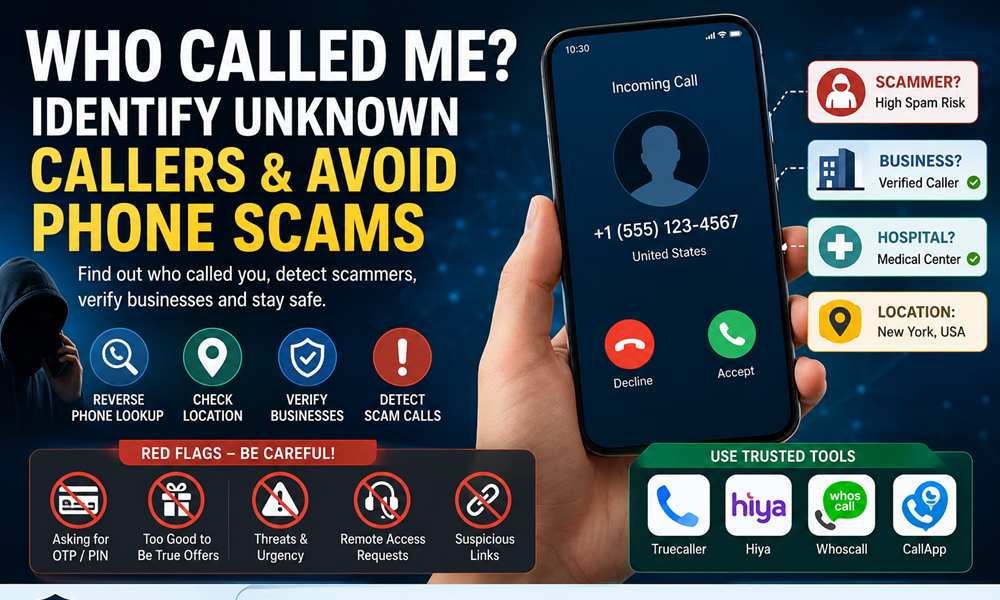
Why You Should Verify Unknown Phone Numbers
Scammers frequently impersonate:
- Banks
- Government agencies
- Courier companies
- Telecom operators
- Customer support departments
- Job recruiters
- Business owners
Their goal is often to obtain:
- OTPs
- Bank details
- UPI PINs
- Aadhaar information
- Personal data
- Direct payments
A simple verification process can help protect your money and identity.
1. Search the Number on Google
One of the easiest methods is to search the full phone number online.
For example:
“9876543210”
You may find:
- Spam reports
- Scam complaints
- Forum discussions
- Business listings
- Social media profiles
If multiple people report suspicious activity, consider the number unsafe.
2. Check Caller Identification Apps
Apps like:
- Truecaller
- Hiya
- Whoscall
can provide information submitted by other users.
However, remember:
Caller ID Is Not Proof
Names shown in caller ID apps can change over time.
Some scammers intentionally register misleading names such as:
- SBI Customer Care
- Airtel Verification
- Government Officer
- Police Department
Use caller ID as a clue, not as final verification.
3. Look for a Verified Business Website
If the caller claims to represent a company:
Verify Independently
Visit the company’s official website and compare:
- Phone numbers
- Email addresses
- Office locations
Never rely solely on information provided during the call.
4. Check Business Directories
Legitimate businesses often maintain online listings.
Look for:
- Business name
- Website
- Address
- Customer reviews
- Contact details
If a business exists across multiple trusted sources, it is generally a positive sign.
5. Search Social Media Profiles
Many genuine businesses display their contact numbers on:
- YouTube
- X (Twitter)
A consistent online presence may help verify legitimacy.
6. Watch for Common Scam Warning Signs
Be cautious if the caller says:
- “Your account will be blocked.”
- “Share your OTP.”
- “Your KYC has expired.”
- “Transfer money immediately.”
- “Download this app.”
- “Your parcel contains illegal items.”
These are common tactics used in scam calls.
7. Check the Country Code
Unexpected international calls deserve extra caution.
Examples:
- +44 (United Kingdom)
- +1 (United States/Canada)
- +234 (Nigeria)
- +92 (Pakistan)
If you do not expect an international call, verify before responding.
8. Never Trust Urgency
Scammers often create pressure by saying:
- “Act now.”
- “Only today.”
- “Within 30 minutes.”
- “Immediate suspension.”
Legitimate organizations usually provide official notices and reasonable response times.
9. Ask Questions
If you answer the call:
Ask:
- Which company are you calling from?
- What is your employee ID?
- What is the purpose of the call?
- Can I call back through your official customer care number?
Scammers often become evasive when asked detailed questions.
10. Never Share Sensitive Information
Never reveal:
- OTPs
- ATM PINs
- UPI PINs
- Passwords
- CVV numbers
- Aadhaar details
- Internet banking credentials
Legitimate organizations generally do not request these over the phone.
Real-Life Example
Caller:
Hello Sir, your bank account verification is pending.
Recipient:
Which bank are you calling from?
Caller:
State Bank.
Recipient:
What is my branch name?
Caller:
Sir, please first verify your mobile number.
Recipient:
Can I call the official customer care number instead?
Caller:
No Sir, this must be completed immediately.
Result:
Strong scam indicators:
- Urgency
- Refusal to allow verification
- Request for personal information
Quick Phone Number Safety Checklist
Before trusting a phone number, ask:
✅ Does the business have an official website?
✅ Does the number appear consistently online?
✅ Are there positive reviews or business listings?
✅ Can the caller provide verifiable details?
✅ Is the caller avoiding questions?
✅ Is the caller demanding urgent action?
If several red flags appear, avoid sharing information.
What to Do If You Suspect a Scam Call
- Hang up immediately.
- Block the number.
- Report the number through your phone or caller ID app.
- Warn family members.
- Monitor bank accounts if information was shared.
- Contact your bank immediately if financial details were disclosed.
Frequently Asked Questions (FAQ)
Can a phone number be spoofed?
Yes. Scammers can make a call appear to come from a different number.
Is Truecaller always accurate?
No. It provides useful information but should not be considered definitive proof of identity.
Can someone hack me just by calling?
Generally no. The real danger comes from sharing sensitive information or installing malicious apps.
Should I call back missed calls?
Only after verifying the number.
What is the safest way to verify a caller?
Contact the organization directly using phone numbers listed on its official website.
Final Thoughts
A phone number alone does not guarantee trustworthiness. The safest approach is to verify independently, avoid sharing sensitive information, and remain cautious when callers create urgency or pressure.
Taking a few minutes to verify a number can prevent financial loss, identity theft, and fraud.
Verify Businesses Before You Trust Them
Whether you’re dealing with a service provider, seller, consultant, or local business, always verify their details before making payments or sharing information.
Explore business listings, growth resources, and business information at VyaparGrow.com and make informed decisions before engaging with unknown contacts.