
Top 20 Most Common Scam Call Phrases in India (2026) – How to Identify & Avoid Fraud Calls
Top 20 Most Common Scam Call Phrases Used by Fraudsters in India
Scammers are becoming more sophisticated every year. They use fear, urgency, greed, authority, and emotional manipulation to trick people into sharing personal information, OTPs, bank details, or money.
If you receive a call containing any of the following phrases, stay alert and verify independently before taking any action.
1. “Your bank account will be blocked today.”
Scammers create panic so you act without thinking. Banks rarely make such urgent threats over random phone calls.
2. “Please share the OTP to verify your account.”
No legitimate bank, UPI provider, or government department will ask for your OTP.
3. “Your KYC has expired.”
Fraudsters often pretend to be from banks, Paytm, PhonePe, Google Pay, or telecom providers.
4. “Your PAN card has been linked to illegal activities.”
This is a fear-based scam designed to make victims panic and cooperate.
5. “A parcel in your name contains illegal items.”
The caller may claim to be from customs, courier companies, or police departments.
6. “Your SIM card will be deactivated within 2 hours.”
Scammers impersonate telecom companies and ask you to install apps or share personal details.
7. “You have won a lottery worth ₹25 lakh.”
If you never entered a lottery, you didn’t win one.
8. “A family member has been arrested.”
Fraudsters exploit emotions and urgency to extract money quickly.
9. “Your Aadhaar is involved in criminal activity.”
The goal is to scare victims into revealing sensitive information.
10. “Download this app for verification.”
Scammers often ask victims to install remote access apps like AnyDesk or TeamViewer.
11. “Press 1 to avoid account suspension.”
Automated robocalls use urgency to get victims connected to scam agents.
12. “You are eligible for a government subsidy.”
Fraudsters may ask for registration fees or banking details.
13. “Your electricity connection will be disconnected tonight.”
A very common utility bill scam in India.
14. “We are calling from the cyber crime department.”
Scammers frequently impersonate law enforcement officials.
15. “You must transfer money to a safe account.”
No government agency asks citizens to move money to a “safe account.”
16. “Your UPI account has been blocked.”
Scammers often use fake customer support identities.
17. “You have a refund waiting.”
The caller may send a malicious payment request instead of a refund.
18. “Click this link immediately.”
Scammers want victims to act before they think.
19. “Your loan has been approved instantly.”
Fraudsters may ask for processing fees before releasing the loan.
20. “Do not disconnect this call.”
Creating pressure is one of the oldest social engineering tactics.
Example Scam Conversation
Scammer:
Hello Sir, I am calling from your bank. Your KYC has expired and your account will be blocked today.
Victim:
Really? What should I do?
Scammer:
I will help you update it immediately. Please share the OTP sent to your phone.
Victim:
I received the OTP.
Scammer:
Please tell me the OTP quickly before your account gets suspended.
Reality:
The OTP is usually being used to access the victim’s account or authorize a transaction.
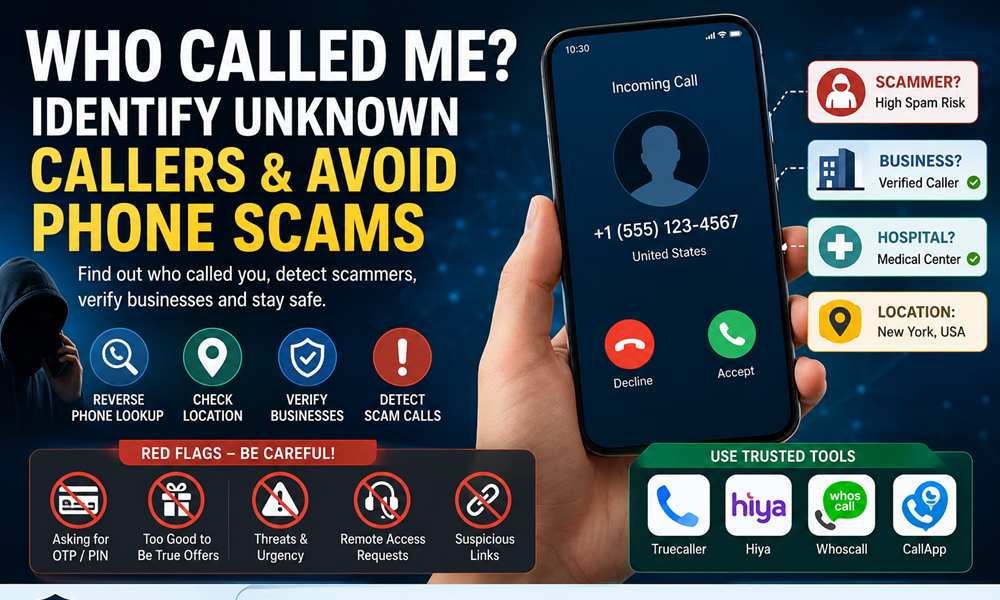
Red Flags to Watch For
✓ Urgent deadlines
✓ Threats of account suspension
✓ Requests for OTPs
✓ Requests for PINs
✓ Requests for banking details
✓ Requests to install apps
✓ Pressure to act immediately
✓ Too-good-to-be-true offers
Safety Tips
Never Share
- OTPs
- ATM PINs
- CVV numbers
- UPI PINs
- Internet banking passwords
Always Verify
- Call the official customer care number from the company’s website.
- Visit the official branch.
- Check official government portals.
Disconnect Immediately If
- The caller pressures you.
- The caller asks for OTPs.
- The caller requests screen sharing.
- The caller asks for remote access.
Why Scammers Succeed
Scammers usually exploit five emotions:
- Fear
- Greed
- Urgency
- Trust
- Curiosity
Understanding these psychological triggers can help you avoid becoming a victim.
Frequently Asked Questions (FAQ)
Can someone hack my bank account with just my phone number?
Usually no. However, your phone number can be used in phishing attempts, OTP scams, and social engineering attacks.
Is it safe to answer unknown calls?
Yes, but never share sensitive information until the caller’s identity is verified.
Can Truecaller names be trusted?
Not always. Names can change, and scammers may use misleading identities. Treat caller ID as a clue, not proof.
What should I do after receiving a scam call?
Block the number, report it, and warn friends or family members.
Can scammers spoof official phone numbers?
Yes. Modern technology allows scammers to display fake caller IDs that appear legitimate.
What is the safest response to a suspicious call?
Hang up and contact the organization directly using official contact information.
Stay Safe with Verified Business Information
Finding legitimate businesses online is becoming increasingly important as phone scams and fake listings continue to rise.
At VyaparGrow, our goal is to help users discover businesses, services, and opportunities while promoting transparency and trust in the business ecosystem.
Explore verified business information, business listings, and growth resources at:
Before trusting any caller, business, or service provider, always verify their identity through official channels.